When you begin shopping for an open-frame rack, you will face a fundamental design choice: do you need two vertical posts or four? While it might seem like a minor detail, the number of posts determines the weight capacity, the type of equipment you can mount, and the overall stability of your IT infrastructure.
In this guide, we will break down the differences between 2-post and 4-post racks to help you decide which is right for your environment.
What is a 2-Post Rack? (The Telco Rack)
A 2-post rack consists of two vertical aluminum or steel uprights connected to a heavy base. Equipment is mounted by bolting its front “ears” directly into these two posts.
-
Mounting Style: Center-mounted or front-mounted.
-
Best For: Lightweight networking gear, patch panels, and telecommunications equipment.
-
Pros: Extremely affordable, takes up very little floor space, and offers 100% accessibility to cables.
-
Cons: Low weight capacity and lacks support for long, heavy equipment like servers.
What is a 4-Post Rack? (The Server Standard)
A 4-post rack features four vertical rails connected by a top and bottom frame. This creates a rectangular “box” structure that supports equipment at both the front and the back.
-
Mounting Style: Four-point mounting (front and rear).
-
Best For: Servers, heavy UPS units, large storage arrays, and any equipment on sliding rails.
-
Pros: Massive weight capacity, high stability, and compatible with almost all rack-mount hardware.
-
Cons: More expensive, larger footprint, and requires more planning for cable routing.
Comparison: Stability and Weight
| Feature | 2-Post Rack | 4-Post Rack |
| Weight Capacity | 300 – 800 lbs (Approx.) | 1,000 – 3,000 lbs (Approx.) |
| Equipment Support | Front-heavy (Cantilever) | Balanced (4-point) |
| Depth Support | Shallow (12″ – 18″) | Deep (24″ – 48″) |
| Earthquake Rating | Generally Lower | Generally Higher |
The “Cantilever” Problem
The biggest weakness of a 2-post rack is leverage. When you mount a deep piece of equipment (like a server) in a 2-post rack, only the front 2 inches are bolted in. The rest of the server hangs out the back. This creates a “diving board” effect that can bend the rails or cause the rack to tip.
-
The Solution: If you must put a deep server in a 2-post rack, you need a Center-Mount Shelf or specialized 2-post conversion rails. However, this is usually less stable than using a 4-post rack.
When to Choose a 2-Post Rack
-
Networking Closets: If you only have a few switches and patch panels, a 2-post rack is efficient and easy to manage.
-
Telecommunications: For fiber terminations and VoIP gateways, 2-post is the industry standard.
-
Budget Constraints: If you are building a small home lab with only lightweight networking gear, a 2-post rack saves significant money.
When to Choose a 4-Post Rack
-
Enterprise Servers: Almost all server rail kits require 4-point mounting to slide in and out safely.
-
Maximum Security: 4-post racks can be turned into enclosed cabinets with locking doors.
-
High Density: If you plan on filling the rack from top to bottom with hardware, the 4-post structure is the only safe way to handle the weight.
If your goal is to build a professional server environment, the 4-post rack is the clear winner. It provides the depth and strength required for modern hardware. However, for dedicated networking stations or telco hubs, the 2-post rack remains a reliable, space-saving classic.
Experience Tip: If you choose a 2-post rack, always bolt the base directly into the concrete floor. Because they are top-heavy, a 2-post rack is much more likely to fall over during a cable pull or equipment swap if it isn’t secured to the building.
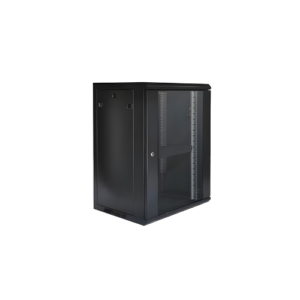
12U Server Rack
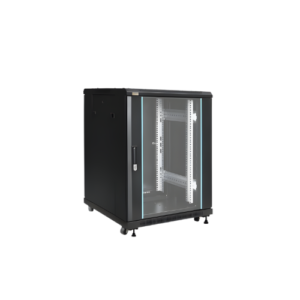
15U Server Rack